A year ago today, on a Sunday morning, I was reflecting on something Pope Leo XIV had posted a couple of days earlier, on Fri 7 Nov 2025: “Every [AI] design choice expresses a vision of humanity.” And I wrote at the time last year that there are better and worse ways to steer the AI revolution. The worst hands our values to a few unaccountable corporate tech lords while governments dither or sell out. Better would be: democracies strengthen themselves to legislate AI guardrails.
Last week’s elections (NYT gift link) give me heart. Not because of who won, but because of what voters did: in 40 of 41 local measures they voted to limit data centers, most Democrats and most Republicans opposed one in their own community, and the industry’s super PACs lost most of their close races. Democracy can still say “No.” The harder work is learning to say “Yes, on our terms.” A world with both more democracy and more intelligence is a good thing.
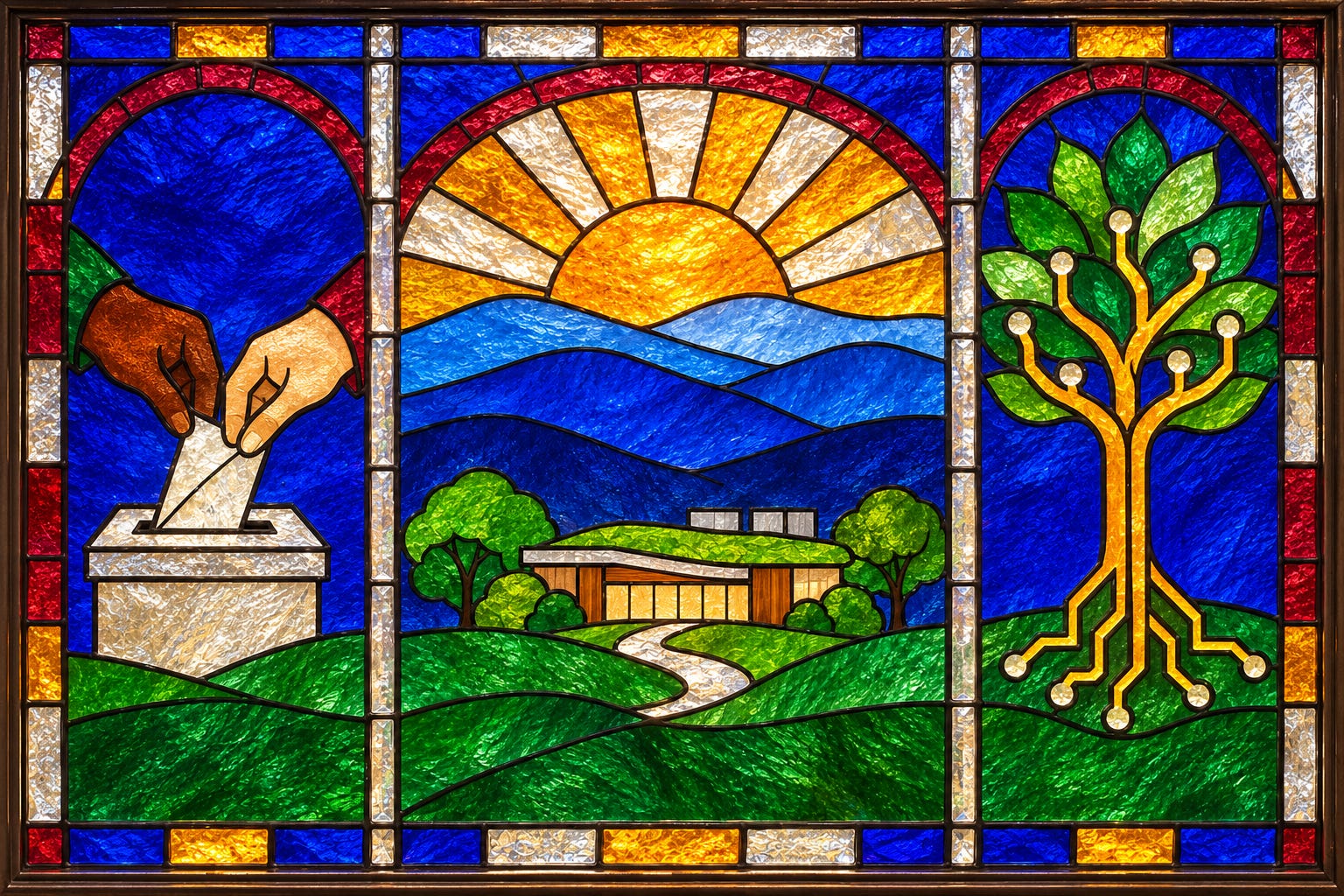
For four years now I’ve said that, with machine intelligence, extremism is no virtue. Not AI doomerism. Not unbridled acceleration. The path we should be seeking is the middle way. And I expect finding that middle path will be messy and difficult.
Virginia has learned some hard lessons, lessons other states can learn from. Northern Virginia alone holds about an eighth of the world’s data-center capacity, a quarter of this hemisphere’s. Within an hour’s drive of my house there are more than 500 data centers. And we made many mistakes. But the benefits to the Commonwealth have been undeniably real: our schools are better, we pay our teachers, police, and firefighters more, our taxes are lower, and Virginia is still the most beautiful state in the union.
This year, Loudoun County expects about $1.3 billion in data-center taxes, roughly 40 percent of its general fund. That money helps pay for schools, police, and firefighters, and it has let Loudoun lower its homeowners’ tax rate over the past decade. Next door, Prince William’s new budget, buoyed by data-center revenue, gives its schools about $124 million more, and the average homeowner’s bill still goes down.
And we’re still learning. We’re learning to say “No” to data centers that a community doesn’t want; my parishioners, friends, and neighbors here in Fauquier County stopped two proposals in as many years that were far along in the process. We’re learning to be transparent: no NDAs, no nondisclosure agreements, between AI firms and our state and local governments. And where a community does choose to welcome data centers, we’re learning to make sure that community benefits significantly: not just better schools, but better libraries, parks, roads, and health care, by taxing the compute data centers generate. Further, that means data centers paying for their electricity in a way that keeps their neighbors’ bills low. Respecting local concerns about water, and about noise. Buying bonds today to pay for their dismantling in thirty or fifty years. And making them beautiful.
More democracy. More intelligence. Messy, difficult, and good.